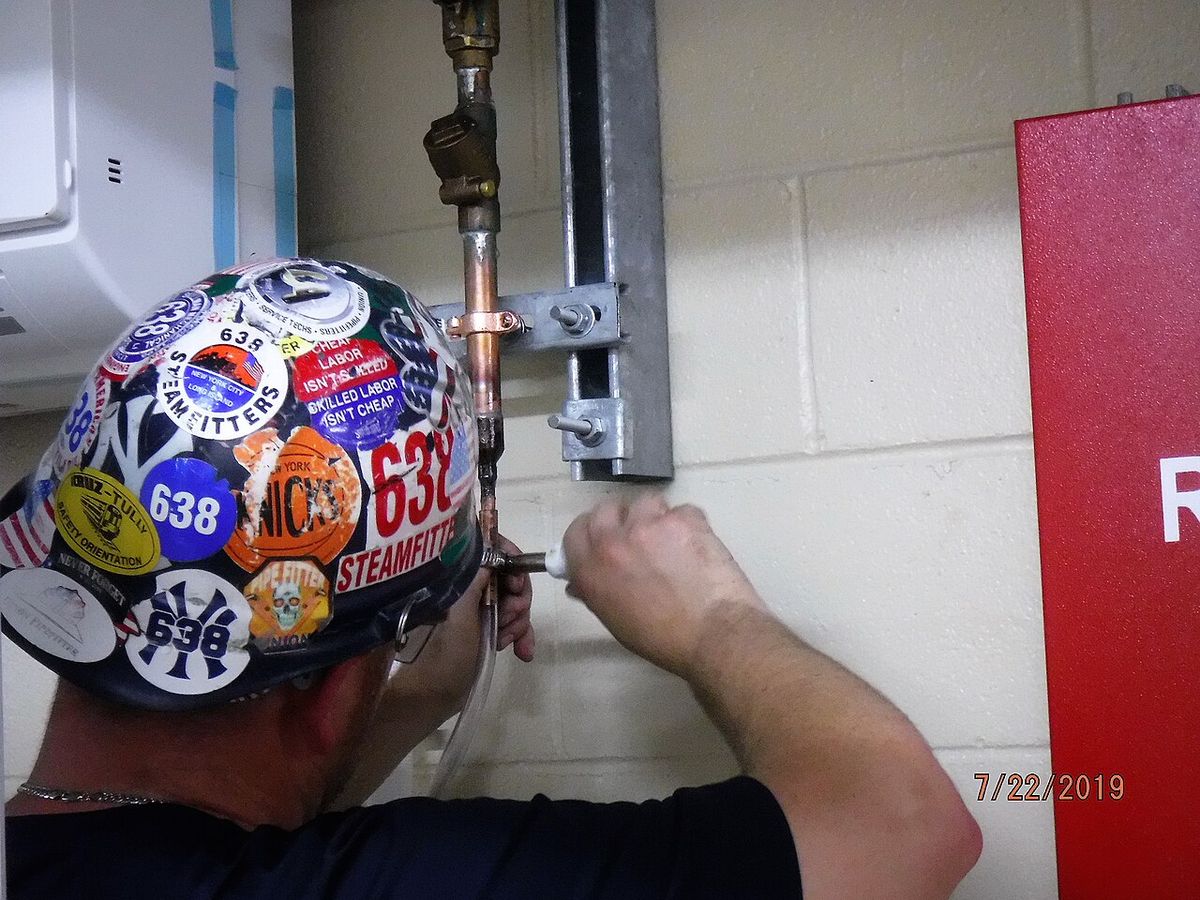
AC Line Set Replacement: Costs & Timing
Key takeaways
- The line set is permanent infrastructure — reusing the wrong lines can doom a new system with contamination, leaks, or warranty issues.
- Replace when switching refrigerant types, when lines are undersized or damaged, or after a compressor burnout; reuse only after proper flush and pressure test.
- 2026 replacement costs: $800-$1,800 for accessible runs, $1,800-$3,500 for difficult routing through finished spaces.
- Insist on nitrogen-purged brazing, 300+ PSI pressure testing, and evacuation to 500 microns — in writing on the proposal.
- Warning signs include repeated refrigerant top-offs, coil icing, oil stains on lines, and visible corrosion or crushed copper.
The line set — the pair of copper tubes carrying refrigerant between your indoor and outdoor units — is the circulatory system of your air conditioner. It's also the component most likely to be "reused to save money" during a system replacement, a decision that can doom a brand-new $10,000 system with contamination, leaks, or the wrong refrigerant. Knowing when a line set must be replaced, when it can be reused, and what replacement costs in 2026 is essential knowledge before any AC project. Here's the complete picture.
What a Line Set Is and Why It Matters So Much
A line set is two insulated copper tubes: the larger suction line carrying cool vapor back to the compressor, and the smaller liquid line carrying warm liquid refrigerant to the indoor coil. Together they form the sealed refrigerant circuit — the closed loop that makes air conditioning possible. The copper must be clean, dry, correctly sized, and completely sealed; anything less degrades the entire system.
Line sets matter disproportionately because they're permanent infrastructure. They run through walls, attics, crawlspaces, and underground — installed once, then buried behind drywall for decades. When a system is replaced, the line set is the one component that's genuinely difficult to access, which is why contractors are tempted to reuse it and why homeowners should be skeptical of that temptation.
The stakes of getting it wrong are high. An undersized suction line starves the compressor of refrigerant and oil return, shortening its life. A contaminated line set — residual mineral oil from an old R-22 system, moisture, or debris — poisons a new system's refrigerant and can destroy a compressor within months. A line set with a slow leak at an old flare or braze joint will bleed an expensive new refrigerant charge into the atmosphere. In each case, the "savings" of reusing the old lines evaporate into a repair bill or a voided warranty.
Modern refrigerants raise the stakes further. With the industry's 2026 transition to lower-GWP refrigerants like R-454B, new systems operate at different pressures and use different oils than the R-22 and R-410A systems they replace. Compatibility isn't a guess — it's a specification, and the line set is part of it.
Google Nest Learning Thermostat (4th Gen) with Temperature Sensor

Learns schedule and automates HVAC energy savings across rooms
*Affiliate Disclosure: As an Amazon Associate, Elevate Home earns from qualifying purchases. Pricing and availability subject to change.
When Replacement Is Required vs. When Reuse Is OK
This is the decision at the heart of every AC replacement quote. Here's the honest framework:
Replace the line set when:
- Switching refrigerant types (e.g., R-22 to R-410A or R-454B) — old mineral oil residue is incompatible with new POE oils, and flushing is unreliable in long or complex runs.
- The old lines are undersized for the new equipment — manufacturers publish required line diameters by capacity and run length; if the existing lines don't meet spec, they must go.
- There's known contamination — a compressor burnout acidifies the oil and coats the lines; no flush fully remediates a burnout.
- Lines are damaged — kinks, corrosion, or previous repairs with multiple couplings are all replacement triggers.
- The run is excessively long or has too many joints — each braze joint is a future leak point; a fresh continuous run is more reliable.
Reuse can be acceptable when: the existing lines are the correct diameter for the new equipment, the refrigerant type is unchanged, the lines are accessible enough to inspect, a proper nitrogen-purged flush and pressure test pass cleanly, and the run is in good physical condition. Even then, many premium contractors replace as policy — the incremental cost is small against the system price, and it eliminates an entire category of risk.
The warranty angle: some manufacturers' extended warranties require new line sets or documented flushing procedures. Ask your contractor to confirm in writing that their line-set decision keeps your equipment warranty intact. A contractor who reuses lines to shave $800 off a bid while quietly voiding a 10-year parts warranty has done you no favors.
What Replacement Involves: The Real Work
Line set replacement is straightforward in concept and variable in execution. The work:
1. Routing the new run. The technician plans the path from outdoor unit to indoor coil — ideally the shortest route with the fewest bends. New copper comes in soft coils that are unrolled and formed by hand, minimizing joints. Where the old line set ran through finished walls, the new run may follow the same chase (if accessible) or take a new exterior or attic route. Exterior line-hide covers ($100-$300 in materials) give exposed runs a clean, professional appearance.
2. Sizing correctly. Line diameter is specified by the equipment manufacturer based on system capacity and total run length (including vertical lift). A 3-ton system might call for 3/4-inch suction and 3/8-inch liquid lines on a standard run, with upsizing required beyond certain lengths. This isn't optional — wrong sizing directly affects capacity, efficiency, and compressor longevity.
3. Brazing with nitrogen purge. Joints are brazed (high-temperature silver solder), and best practice requires flowing dry nitrogen through the lines during brazing. Without the purge, oxidation forms scale inside the copper that later circulates as contamination. Ask your contractor explicitly: "Do you nitrogen-purge while brazing?" The right answer is immediate and confident.
4. Pressure testing and evacuation. The new lines are pressure-tested with nitrogen (typically 300+ PSI held to verify no leaks), then evacuated with a vacuum pump to 500 microns or below to remove all moisture and non-condensables. The vacuum must hold — a decaying vacuum means a leak or moisture. This step is where thoroughness separates good contractors from fast ones; proper evacuation takes time and can't be rushed.
5. Insulation. The suction line gets closed-cell insulation along its entire length — every exposed inch sweats condensation and loses efficiency. Insulation should be continuous, UV-protected outdoors, and properly sealed at joints.
2026 Costs: Replacement Pricing by Scenario
Line set replacement costs vary more with access than with materials. The copper itself is a few hundred dollars; the labor of routing it through a finished home is the real cost.
Scenario A — straightforward replacement during a system changeout: the new run follows an accessible path (attic, crawlspace, or exterior). $800-$1,800 including copper, insulation, line-hide covers, brazing, pressure test, and evacuation. This is the most common case and the one most quotes assume.
Scenario B — difficult routing: the run passes through finished walls, multiple floors, or requires opening and patching drywall. $1,800-$3,500, with drywall repair often adding $300-$800 more. In these cases, ask about alternative routing — a slightly longer exterior run in line-hide is often cheaper and more serviceable than opening three walls.
Scenario C — long runs: detached garages, additions far from the condenser pad, or multi-story runs exceeding 50-75 feet. $2,000-$4,000+, with upsized copper and additional refrigerant charge factored in. Long runs also need careful attention to oil return — vertical lift beyond manufacturer limits requires traps and specific piping practices.
Scenario D — emergency leak repair: a leaking line set on an otherwise working system. If the leak is at an accessible joint, a braze repair runs $300-$700 including refrigerant recovery, repair, evacuation, and recharge. If the lines are extensively corroded (common in coastal areas or where lines run underground without protection), partial or full replacement follows Scenario A/B pricing.
Refrigerant itself is a meaningful cost layer in 2026: with the R-454B transition underway, refrigerant prices are in flux, and a full system charge runs $400-$1,200 depending on system size and refrigerant type. Factor it into any leak-repair decision — at some point, recharging a leaky old system stops making sense.
Costs are 2026 US market ranges; get itemized local quotes. Always get the line-set decision and its rationale in writing on the proposal — "reuse existing line set after flush and pressure test" or "replace with new sized per manufacturer spec" — not a vague allowance.
Warning Signs Your Line Set Needs Attention
Line sets fail gradually, and the symptoms masquerade as other problems. Watch for:
- Declining cooling performance with no other explanation — especially if the system was serviced recently and refrigerant was "topped off." Repeated top-offs mean a leak, and the line set is a prime suspect.
- Ice on the suction line or indoor coil — low refrigerant from a slow line-set leak is a classic cause of coil icing.
- Visible damage: crushed or kinked copper, corroded sections (green/white oxidation), deteriorated insulation exposing bare copper, or insulation that's waterlogged and falling apart.
- Oil stains on or around the lines — refrigerant leaks carry compressor oil with them, so oily residue at a joint or along the insulation is a leak marker.
- Hissing sounds near line connections when the system runs — an audible leak, rare but definitive.
- Underground runs in old installations — copper buried directly in soil without conduit corrodes over decades. If your lines run underground and the system is 20+ years old, proactive inspection is wise.
Diagnosis is a technician's job: electronic leak detection, nitrogen pressure testing with isolation of line segments, and UV dye in stubborn cases. A proper leak search takes 1-2 hours ($150-$300) and is worth every penny before authorizing a recharge — recharging without finding the leak is just scheduling the next service call.
One caution: stop-leak additives marketed for refrigerant leaks. They can gum up metering devices and void warranties, and most reputable technicians advise against them. They're a last resort for systems already slated for replacement, not a repair strategy.
Protecting the Investment: Specs, Warranties, and Maintenance
Whether you're replacing a system or just the lines, protect yourself with documentation:
- Get the sizing spec in writing: line diameters, total run length, and confirmation they meet the equipment manufacturer's requirements for your specific model.
- Confirm the brazing and evacuation procedure: nitrogen purge during brazing, pressure test at specified PSI with hold time, evacuation to 500 microns with a verified hold. These are industry best practices, not extras.
- Document the refrigerant: type and total charge weight, recorded on the service panel and your invoice. You'll need this for any future service.
- Verify warranty compliance: written confirmation that the line-set decision (new or flushed-reuse) satisfies the equipment manufacturer's warranty terms.
- Photograph the routing: before drywall closes or line-hide goes on, photograph the run. Future technicians will thank you, and you'll know exactly where copper lives in your walls.
Ongoing maintenance is simple: keep insulation intact (replace deteriorated sections — it's $2-$4 per foot in materials), keep vegetation and debris clear of exterior runs, and have line condition checked during annual maintenance. In coastal environments, consider protective coating or conduit for exterior copper — salt air is relentless.
Finally, think about the line set during any renovation that opens walls near the run. It's the cheapest moment to inspect, photograph, or even proactively replace aging copper — far cheaper than opening finished walls later. The line set is infrastructure; treat it with the same long-term thinking you'd give plumbing or electrical, because it will outlast several generations of the equipment it serves.
Frequently asked questions
How much does it cost to replace an AC line set in 2026?
Accessible replacements during a system changeout run $800-$1,800. Difficult routing through finished walls or multiple floors runs $1,800-$3,500 plus $300-$800 for drywall repair. Long runs to detached structures can reach $2,000-$4,000+. The copper itself is only a few hundred dollars — labor and access drive the price.
Can the old line set be reused with a new AC system?
Sometimes. Reuse is acceptable when lines are correctly sized for the new equipment, the refrigerant type is unchanged, lines pass inspection, and a nitrogen-purged flush plus pressure test come back clean. Replacement is required when switching refrigerant types, after compressor burnout, or when lines are undersized, kinked, or corroded. Confirm the decision keeps your equipment warranty intact — in writing.
Why do contractors want to replace the line set during a system changeout?
Because the incremental cost ($800-$1,800 on an $8,000-$15,000 project) eliminates an entire category of risk: incompatible residual oil, undetected slow leaks, undersized copper, and corrosion. Many premium contractors replace as standard policy. Be skeptical instead of a contractor who insists on reusing lines without a flush, pressure test, and sizing verification.
How long do copper line sets last?
Properly installed copper line sets last 25-40+ years — often outliving two generations of equipment. The exceptions are underground runs without conduit protection (soil corrosion), coastal installations (salt air), and lines damaged during renovations. Age alone isn't a replacement trigger; condition and compatibility are.
What are the signs of a leaking line set?
Declining cooling that returns after a refrigerant 'top-off' (then fades again), ice on the indoor coil or suction line, oil stains on lines or insulation, visible corrosion or damage to the copper, and hissing near connections. Diagnosis requires a technician's leak search ($150-$300) — recharging without finding the leak just schedules the next service call.
Does the R-454B refrigerant transition affect my line set?
It can. New R-454B systems operate at different pressures and use different compressor oils than older R-22 and R-410A equipment. When replacing a system across refrigerant generations, the line set must be verified compatible — correct diameter per the new equipment's specs, thoroughly flushed or replaced, and pressure-tested. This is exactly the scenario where replacement is usually the right call.
Keep reading
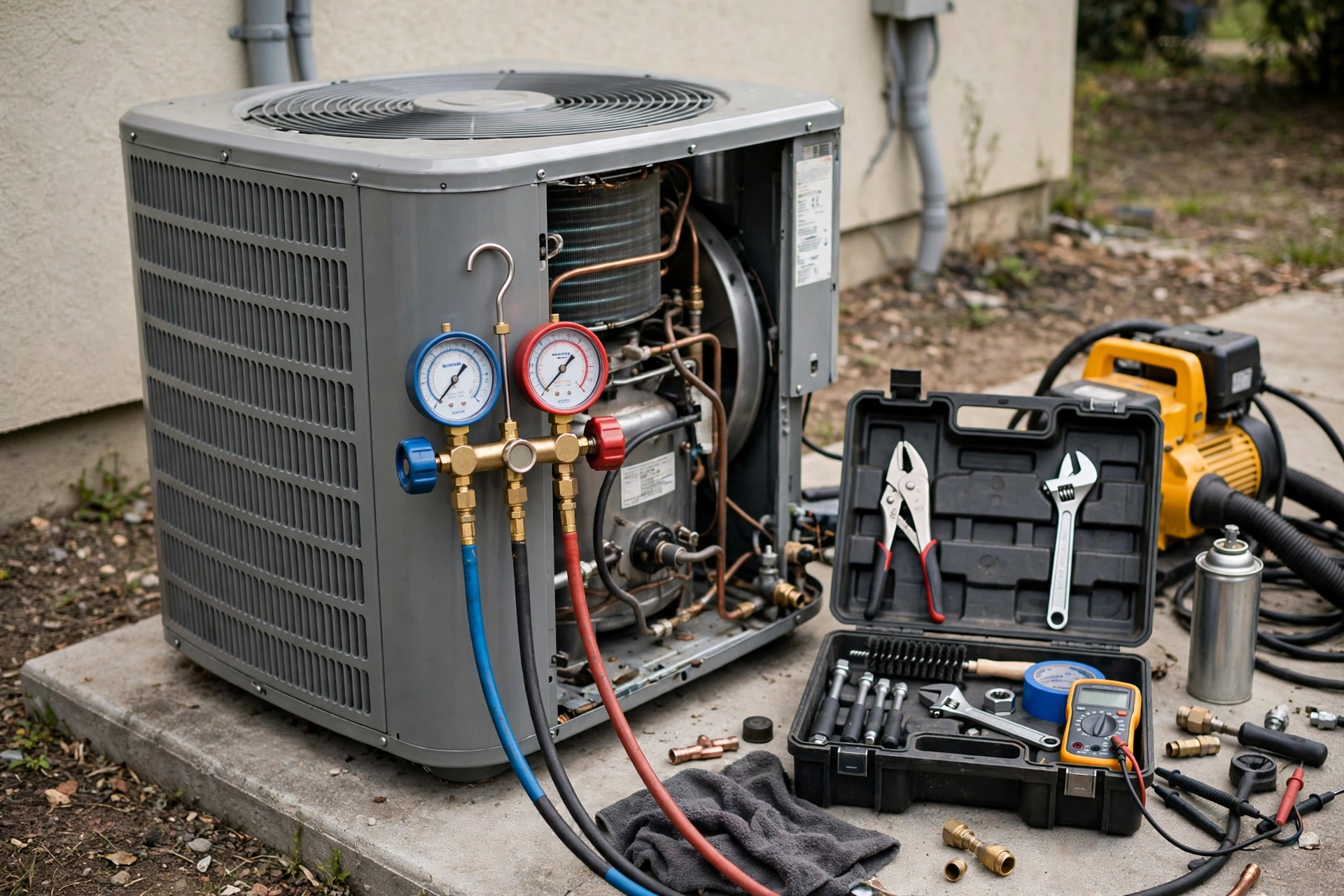
2026 Regulation
R-454B Refrigerant Transition: 2026 Guide
The R-454B refrigerant transition explained for 2026: what changed, A2L safety, R-32 vs R-454B, cost impact, a…
Heating Comparisons
Heat Pump vs Furnace: 2026 Cost Comparison
Heat pump vs furnace 2026: installed costs, operating costs by climate and fuel price, and the honest 10-year …
Ownership
HVAC Maintenance Plans: Worth It? 2026 Guide
Is an HVAC maintenance plan worth it in 2026? Plan vs per-visit math, what's included, fine-print traps, and w…
System Types
High-Velocity Mini-Duct HVAC: 2026 Guide
High velocity mini duct HVAC (Unico/SpacePak class) for homes without duct space: how it works, comfort, 2026 …
Transfer Equipment
100A vs 200A Automatic Transfer Switch
100 amp vs 200 amp transfer switch: service-entrance vs subpanel topology, when each is required, costs, and l…
Pillar 01 · Energy Resilience
10kWh vs 13.5kWh vs 20kWh Home Battery: Which Size Is Right? (2026)
10kWh vs 13.5kWh vs 20kWh home battery compared: usable capacity, backup runtime, solar pairing, and which tie…